On September 4, the Trinity College Archives welcomed visitors for a drop-in cyanotype workshop that combined history, creativity, and a little time in the sunshine.
Cyanotypes are one of the earliest photographic printing processes, invented in 1842 by John Herschel. The process uses light-sensitive iron salts that react to ultraviolet light, producing images in a striking deep blue colour. Many will recognize the distinctive hue from architectural blueprints, which were traditionally created using the cyanotype process.
In preparation for the workshop, we selected archival photographs from the Archives’ collections, focusing on Trinity’s instantly recognizable Collegiate Gothic architecture. We converted digital images of these photos into negatives by inverting their tones and printing them onto transparencies. Participants then used these negatives to create cyanotype prints by placing them on pre-coated, light sensitive paper and exposing them to sunlight for ten minutes.


Left: Pre-coating the cyanotype paper. Right: Assembling the negative and the sensitized cyanotype paper for exposure.
After a quick rinse in water, the images gradually appeared in rich blue tones, which deepened further as the prints dried and oxidized. Because cyanotypes can develop differently depending on factors like sunlight and exposure time, every print was a little bit different. Workshop participants transformed familiar views of Trinity’s buildings into one-of-a-kind works of art that they could take home and enjoy (perhaps to be placed on the walls of dorm rooms).

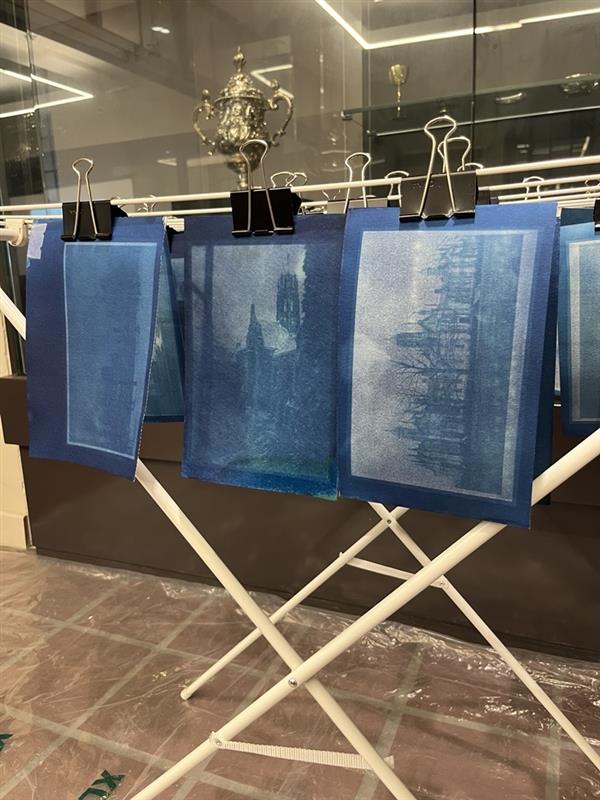
Left: An exposed cyanotype print. Right: Cyanotype prints drying on a rack.
The workshop attracted a steady stream of visitors throughout the afternoon. Thanks in part to Orientation Week activities, we welcomed many new first-year students. Staff, alumni, and members of the wider community also stopped by to try their hand at the process. The event offered a fun and accessible way to explore both the history of photography and Trinity’s past, while introducing visitors to the work of the Archives. The workshop proved such a hit that we are already looking forward to offering it again!

Participants pose in front of their work.