Policy, Philosophy & Economics Stream
In Trinity One’s Policy, Philosophy and Economics (PPE) stream, students will examine some of the most challenging issues that confront contemporary governments and citizens from diverse theoretical perspectives. The stream has two fundamental goals: first, to introduce students to the moral challenges of political decision-making and second, to introduce students to current governance practices in Canada and other democratic nations.
Students will discuss issues related to social inequality, educational policy, crime and punishment, health care, economic growth, tax policy, and the transfer of wealth. Students will have the opportunity to think creatively and from a number of theoretical perspectives about pragmatic policy solutions to such issues.
STREAM REQUIREMENTS
Students in the PPE stream must enrol in two Trinity One seminars in their first year: TRN160Y1: Public Policy and the Public Good and TRN172Y1: Political Economy and Social Inequality. Each of these courses amounts to 1.0 FCE and will continue throughout the fall and winter semesters. These credits will account for 2.0 credits of the typical 5.0 credit load in first year.
AFTER TRINITY ONE
Students who complete the Policy, Philosophy and Economics stream are well-equipped to pursue further studies in related academic disciplines. Students may apply concepts and skills learned in the PPE stream to studies in the sciences, social sciences or humanities.
Students in the PPE stream may be especially interested in pursuing a major in at the University of Toronto’s Munk School of Global Affairs & Public Policy. Alternatively, students may wish to build on the stream’s core themes by pursuing studies in economics or philosophy. Finally, PPE students commonly express interest in Political Science, History and Ethics, Society and Law or International Relations (both hosted by Trinity College).
STREAM MENTORS
Your stream mentors will support you throughout the academic year by hosting workshops and activities to assist you with course assessments and to facilitate community building. They will be your first point of contact should you have any academic concerns or questions about student life! Meet your stream mentors below!
|
Program(s) of Study: Economics (Specialist), Public Policy (Major) As a PPE student, Trinity One allowed me to explore the ideas of justice, the public good, liberty, political economy, and public policy, which helped me discover my passion for these fields. I not only learned about these topics but also engaged with them through discussions with classmates and professors. This made the experience stand out from any other course in my first year at UofT, giving me key skills that helped me navigate university life. Outside of school, I’ve worked as an economic analyst at the Volkswagen Group Dealer Association in Mexico and at SAI Derecho y Economía, a legal and economic consulting firm. I also make an effort to stay informed on current affairs by following the news regularly. In my free time, I enjoy running or biking along Toronto’s waterfront—especially when the weather allows. It’s a great way to disconnect from academic pressure. I also play the guitar, with a particular interest in rock, blues, and jazz, which helps me unwind. Welcome to Trinity One! I’ll do my absolute best to support and guide you through your first year at university. I know this time can feel overwhelming or stressful, but with the right planning and support, it can also be a meaningful time to learn, make new friends, and create lasting memories. I’m excited to meet you all! |
|
Program(s) of Study: Peace, Conflict, and Justice (Major), International Relations (Major) and Business Fundamentals Certificate Participating in the Policy, Philosophy, and Economics (PPE) Stream gave me the chance to reflect on “what makes a good society”. Through philosophy, I explored themes like social inequality and political decision-making, while open discussions with peers helped me develop stronger communication and listening skills. I particularly enjoyed examining the moral dilemmas in economics, which deepened my understanding of real-world issues and helped shape my academic direction. I enjoy participating in various on- and off-campus activities. I’m currently involved with the University of Toronto’s Aerospace Team, and the G20 Research Group, as I’m particularly interested in both domestic and international social issues. I also enjoy auditing lectures from the Canadian Studies, Jewish Studies, and Political Science departments. If you’re looking for events or opportunities around campus, I’d be happy to share what I know. In my downtime, I like watching movies, playing political and strategy games, and listening to classical or musical soundtracks while studying. Welcome to Trin One, first year can be difficult and challenging, but please know that you’re not alone, and I’m always happy to help! I’m happy to have met you all, and I’m always here if you need a person chat or have any questions! |


ALUMNI TESTIMONIALS
Hear from graduates of the Trinity One program – Policy, Philosophy & Economics stream!
Rounding up the graduate celebrations, I am honored to present the testament of Xialong (James) Wang, Trinity One graduate of the Policy, Philosophy, and Economics Stream (PPE).

Undoubtedly, entering a new environment is overwhelming, particularly with the added freedom (and responsibility) to shape your own career and studies. To James, Trinity One was the crucial gateway that not only helped set the path for his undergraduate journey in Political Science and Philosophy, but also made the process more manageable and enjoyable. Contrasting the typically large first-year lectures, the small seminary-style classes made in-class discussions and questions more welcoming. In this environment, particularly, James learnt early on how to take initiative, allowing him to step up in his upper years in various research projects and positions.
Beyond strict academics, the Trinity One’s sense community would also impact James’ upper years. Wanting to share the same support he received as a first-year student, both in and out of Trinity One, James worked as a peer advisor, persevering through obstacles to organize events and guide freshmen in their first year. Still seeking to share guidance, James encourages incoming students to take initiative in getting to know classmates and professors early on, especially in the supportive environment of Trinity One. “Be more open … and (don’t) stress so much about having a perfect plan…some of the best experiences come from exploring a little outside your comfort zone,” James further emphasizes, recalling that some of his personal highlights at U of T came from unexpected changes to his original interests and plans.
James graduated with a double major in Political Science and Philosophy, as well as a minor in Psychology. Coming full circle with his PPE stream from his first year, he will continue to delve deeper into studies of policy and international affairs at Georgetown University, pursuing a Master of Science in Foreign Service. Applying his own words of wisdom, James is going into this new stage of life with enthusiasm and an open mind, preparing himself by reaching out to alumni above him, without trying to hypercontrol the entire experience.
On behalf of Trinity One, we wish James all the best in his endeavors and look forward to witnessing his further growth and impact!
 I had the privilege of sitting down with soon-to-be graduate Jacob Li to discuss his impactful journey through the University of Toronto’s Trinity One program and his double majors in Economics and Urban Planning.
From the start, Jacob’s passion for economics drove his academic path. The Policy, Philosophy and Economics (PPE) courses at Trinity One offered a perspective distinct from the quantitative models emphasized elsewhere. By integrating historical context, political theory, and considerations of social welfare, PPE provided Jacob a more holistic understanding of economic structures and policy decisions.
“The philosophical and political aspects from Trinity One still shape how I analyze current events and real-world issues today,” Jacob reflected. “It was an invaluable foundation that few economics programs offer.”
Despite beginning his undergrad remotely during COVID-19, Jacob fondly recalled lively, engaging discussions. “The TrinOne courses were the highlight of my week amid COVID – everyone felt comfortable voicing their ideas and perspectives.” This inclusive environment boosted his confidence in developing his own academic voice.
A pivotal lesson Jacob learned was the importance of infusing original thinking into his work. “The papers where I injected my own analysis and opinions often earned my best marks. Have your own academic voice, that’s the key.” This realization culminated in his honors thesis for ECO499, exploring how U.S. highway systems impact intergenerational mobility and societal segregation – work he’s immensely proud of.
Jacob’s journey involved plenty of self-discovery and willingness to explore new paths. His advice? “Don’t be afraid to try different areas as your interests evolve.” Jacob himself transitioned to Urban Studies in his third year as his interests solidified and he began looking for opportunities to work and gain experience in his field. At first, Jacob faced many rejections from applications, but he persevered and eventually secured valuable research assistant roles that opened doors and allowed for growth. Jacob emphasized the importance of building strong connections by proactively seeking out supportive professors. “I was surprised by how friendly and willing to help many were,” he said.
With graduation looming, Jacob is excited for his next step – joining a Harvard lab researching how social capital and networks influence life outcomes. He looks forward to collaborating on meaningful work with brilliant minds. Jacob’s U of T experience taught him resilience and commitment. “It’s normal to feel down sometimes, but focus on the bigger picture and keep pushing toward your goals.”
As he embarks on this new chapter, Jacob is immensely grateful for the strong foundations built through Trinity One and the university’s multidisciplinary system.
On behalf of the entire Trinity community, I extend sincere thanks to Jacob for generously sharing his insights and journey. Congratulations again to this impressive Class of 2024 graduate!
Written by: Lucy Wang, Trinity One Program Assistant, Policy, Philosophy & Economics ’24
 Among this year’s accomplished graduates is Daniel Corredor Llorente, who completed his degree as an International Relations specialist with minors in Economics and Political Science. I had the opportunity to interview Daniel and learn about his impactful journey through the Trinity One program.
Daniel admitted that when he first started Trinity One, being a non-native English speaker made him hesitant to share his thoughts out loud: “For the first two and a half months, I stayed quiet even when I had ideas to contribute. Trinity One created an environment where I eventually felt comfortable using my voice.”
That breakthrough was just one of the many ways the interdisciplinary Trinity One program transformed Daniel’s academic journey and shaped his worldview. The unique offering, which blends a tight-knit community with intellectual intensity, was the perfect fit for the curious student. “I was eager to make close friends while also being challenged at the highest level,” Daniel explained. “Trinity One was the ideal introduction to that balance of pursuing both personal connections and academic rigor.”
As our conversation flowed, it became evident just how foundational those Trinity One courses were for Daniel. He still revisits old notes and readings from the program, crediting it with giving him the solid base of knowledge and critical thinking skills that served him well in upper-year courses. “There were so many times I felt grateful for the thinkers and materials I was exposed to early on,” Daniel reflected. “It made me feel more capable and confident as I progressed.”
More than just intellectual growth, Trinity One instilled values that have stuck with Daniel long past graduation. A favorite saying of his – “If you’re the smartest person in the room, you’re in the wrong room” – speaks to the importance he now places on surrounding himself with people smarter than him. “Trinity One humbled me by showing me how talented and brilliant my peers were,” he said. “It taught me to get outside my comfort zone, to not be afraid of making mistakes or admitting what I don’t know.”
Those lessons in turn shaped Daniel’s ability to collaborate, ask good questions, and lean on others’ strengths just as much as his own. Skills he now applies in his work as a fellow at the Organization of American States, where he tackles complex human rights issues like violations of free expression. “My dream was always to be a citizen of the world in this shared humanity we’re all part of,” Daniel told me. “Trinity One opened my eyes to the importance of that global citizenship. It gave me the blueprint for how to go out and change the world for the better.”
Written by: Lucy Wang, Trinity One Program Assistant, Policy, Philosophy & Economics ’24
Congratulations to the class of 2023! I had the pleasure of interviewing Raaghav Chaudhry from the Policy, Philosophy & Economics (PPE) Stream about their undergraduate experiences at the University of Toronto and future plans.
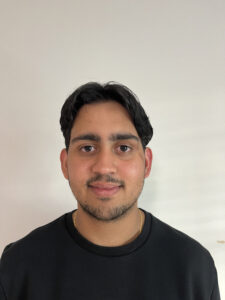 Raaghav enjoyed the interdisciplinary nature of the Trinity One PPE courses, as it was fundamental in developing his worldviews. Classes, like TRN161 (Public Policy and the Public Good) and TRN172 (Political Economy and Social Inequality) enabled him to examine global issues through varying perspectives, including political and philosophical lenses. Raaghav further shared that the seminar-styled courses facilitated collaboration and communication between students and professors, providing a sense of community that may be challenging to find in larger first-year courses.
After his first year, Raaghav gravitated toward a Computer Science Specialist with a Buddhism, Psychology, and Mental Health minor. Raaghav expressed that UofT provides a plethora of opportunities to “meet different people and [be] exposed to numerous new ideas” and urged students to immerse themselves in the academic and cultural richness of the university. Some of Raaghav’s highlights and accomplishments during his undergraduate experience included receiving the Margaret McMillian Scholarship, successfully getting into the Computer Science specialist program, and, most of all, meeting lifelong friends who made the university experience even more memorable.
To incoming and current students, Raaghav highlights the importance of slowing down and practicing mindfulness. Students often find themselves thinking about the next tasks they must complete or feel overwhelmed by the workload. Raaghav shares a quote he resonated deeply with to provide a new perspective: “You cannot become happy, you can only be happy,” whereby happiness is a state of consciousness that exists while being mindful of the present moments. By shifting our attitudes, we can ground ourselves when difficulties or challenges come our way.
For the summer, Raaghav will be going to a four-month meditation retreat to cultivate his mindfulness and passion for Buddhist teachings. I would like to thank Raaghav for speaking about his experience with Trinity One and his plans for the future. It was an absolute pleasure hearing about his journey and his introspective insights!
Written by: Yang Jing Zheng, Trinity One Program Assistant, Policy, Philosophy & Economics ‘22.


The past school year has been rife with uncertainty. The graduates of 2022 have shown perseverance and a willingness to adapt to quickly changing circumstances. I had the pleasure to sit down with two graduates of Trinity One’s Policy, Philosophy and Economics Stream as they approached their convocation– the first in-person convocation since 2019! I spoke with Wenny Jin and Paul Grewar about their experiences at UofT and in the Trinity One program.
Wenny Jin is graduating with an Honours Bachelor of Arts with a specialist in International Relations and a minor in Spanish. Wenny completed Trinity One’s PPE stream in 2019. She spoke about how the PPE stream exposed her to complex readings and content that informed her critical thinking skills and inspired her future research.
Trinity One was just a portion of Wenny’s time at UofT, although Wenny attributes her determination to building a better society to the social justice-oriented focus of the PPE stream. Wenny worked with the G20 and BRICS Research Groups and as a consultant with 180 Degrees Consulting, where she helped a local youth education non-profit enhance its marketing and communications strategies. She also founded an organisation called “Ensemble,” which facilitated conversations between academics, industry professionals, and students about personal experiences and social issues.
Wenny felt that she had learned a lot during her time at UofT, especially regarding the importance of maintaining a work-life balance. She extended some words of advice for incoming students: “Be certain that you are enough. Come with a fresh and open mind to learn, get to know people, and embrace opportunities within and outside of the Trinity One community.”
After convocation, Wenny will be pursuing a Masters in Global Affair at University of Toronto’s Munk School for Public Policy and Global Affairs. She is excited to spend more time with her friends and family and for the opportunity to get to know Toronto a little bit more (uninterrupted by the pandemic). Paul Grewar is graduating with an Honours Bachelor of Arts with a double major in Economics (Data Analytics) and Public Policy.
Paul also completed the PPE stream in 2020. He spoke about how his time in Trinity One invited him to think differently about his academic and professional interests. In Trinity One, Paul appreciated the opportunity to examine the practical side of policy and the ways in which we can use policy to improve the lives of others. In his classes, Paul was able to break down the policy process into a policy cycle. He explored how policy makers move from an abstract problem, to possible solutions, to consultations with interest groups, to action.
Paul’s time in the PPE stream showed him that he was not as interested in political or economic theory as he was in producing tangible outcomes for the lives of others. This informed his decision to double major in economics and public policy, as well as his long-term objective of working in public policy.
At UofT, Paul was inspired by the support and passion of his professors. He spoke about how his professors really encouraged him to overcome his sense of imposter syndrome in academia.
After convocation, Paul will be pursuing a Masters in Economics at the University of Toronto. He will also be working as a research assistant for a project in Health Economics. He is excited to continue to learn how the skills he has learned in academic settings can be applied.
I would like to extend my gratitude to Wenny and Paul for taking the time out of her busy schedule to speak with me. We would like to offer both of our alumni a warm congratulations and best wishes on the next chapters of their journeys. We are excited to see what their futures look like!
Written by: Katherine Delay, Trinity One Program Assistant, Ethics, Society & Law ‘20
“What equalizes us as human beings?”
“How is our consciousness connected to religion?”
“Is religion special, and if so, why?”
“Does the government have the responsibility to protect religion?”
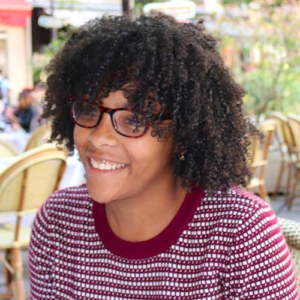
These are questions that are tackled in the religion unit of Trinity One: Public Policy. In this unit, we strive to explore not just the expression of religion, but how religion relates to a person’s dignity and how it is often in conflict with secular society. For example, if a person believes that they should eat halal food because of an internal conviction, where does that conviction fit in a world where halal slaughtering rituals are deemed cruel against animals? Should a government accommodate these convictions or not?
In the beginning of the unit, the class’ biggest discussion was “What made religion special?” Some students believed that religion was not special and should be treated like any other conviction. I did not see it that way. Religion seemed to go deeper than a conviction to refuse to shop at Walmart. However, at the beginning we had not yet been given the arguments for me to encapsulate my feelings on the subject. Through different examples, we wrestled with the friction that takes place between religious conviction and secular standards. Examples included the contraception mandate in Obamacare in the United States and the ban of halal and kosher slaughter in the Netherlands and Poland.
Differences placed on the importance of religion, created two different schools of thought. One school of thought believes that religion must fit itself into secular society. If a law is made that does not align with a religious belief, the followers of the belief will have to adjust. There is a small scope of accommodation. The alternative school of thought is that religion is an intrinsic part of many human experiences and that the government has a duty to accommodate it. It claims that to have a society that is truly free, all citizens must have a right to live by their convictions and beliefs. Therefore, the state must provide a wide accommodation.
The questions that I posed at the beginning of this piece are complex, but they need to be discussed in order to create public policies that bring the greatest utility to society and respect all citizens. When making a law or a policy, we are making statements as to what we want our society to be, defining the future trajectory of society. Regardless of your feelings toward religion, this unit will provide you tools to think critically about the human experience.

